Executive Summary
Replacing disconnected Excel files with a centralized NGO Management Information System grants executives and donors real-time visibility into project indicators.
The Spreadsheets Trap: Risks of Fragmented Data
As non-profit organizations scale their field operations across multiple regional districts, managing program data through manual spreadsheets quickly leads to critical vulnerabilities. When different field teams maintain isolated Excel workbooks, duplicate beneficiary records multiply, formula errors creep into indicator calculations, and aggregating quarterly reports consumes hundreds of staff hours.
Essential Capabilities of a Modern NGO MIS
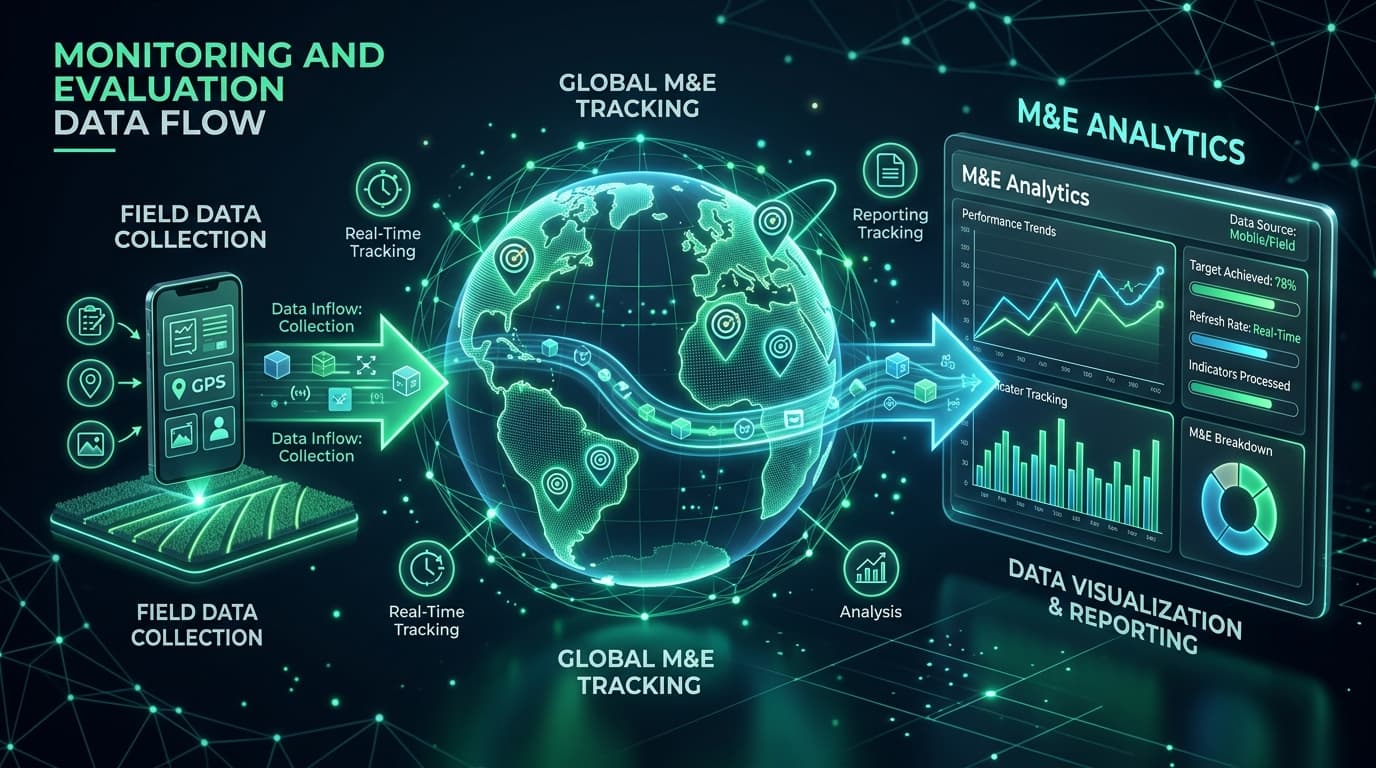
A purpose-built NGO Management Information System (MIS) provides a single, secure source of operational truth. By centralizing beneficiary enrollment, project milestones, spatial coverage maps, and M&E indicator tracking, an MIS turns disparate data points into real-time executive dashboards.
Strengthening Donor Reporting and Verifiable Evidence
Key capabilities of a modern NGO MIS include: unified beneficiary tracking with deduplication rules; customizable M&E logframe indicators; automated calculation of progress targets against baseline data; role-based access control ensuring field staff only view relevant regional records; and automated report generation compatible with major international donor formats.
Role-Based Access Control and Institutional Memory
Centralized information systems also preserve vital institutional memory. When project staff transition or grant cycles renew, historical performance data, verification documents, and audit logs remain securely stored and accessible rather than trapped on departing employees' laptops.
Custom MIS Engineering by Circle Technology
Circle Technology specializes in engineering customized Project MIS and spatial data management platforms tailored to complex donor requirements. Having delivered over 100 successful technology projects, we design scalable MIS solutions built for long-term organizational growth.
Key Takeaways for NGO Leadership
- 1Centralized MIS eliminates duplicate beneficiary records and manual formula errors
- 2Real-time logframe dashboards give leadership instant visibility into milestone progress
- 3Granular role-based permissions protect beneficiary confidentiality and data integrity
- 4Automated export streamlines quarterly compliance reports for international donors
Frequently Asked Questions
Can an NGO MIS integrate with existing mobile survey tools like KoboToolbox or ODK?
Yes. Modern NGO MIS platforms connect via automated APIs to ingest field data directly from KoboToolbox, ODK, or custom mobile applications.
What security measures protect sensitive beneficiary data in an MIS?
Enterprise security includes AES-256 encryption at rest, TLS 1.3 in transit, multi-factor authentication, and strict role-based data partitioning.
Ready to Elevate Your Non-Profit's Digital Capability?
Is your organization struggling with fragmented spreadsheets? Learn how a custom NGO MIS can streamline your monitoring and reporting.
Request MIS Demonstration